
Introduction
Thermal transfer printing is widely used in logistics, warehousing, manufacturing, healthcare, retail, and many other industries. While choosing the right printer and ribbon is important, proper ribbon storage is often overlooked.
Many users assume that a thermal transfer ribbon can be stored indefinitely until needed. In reality, thermal transfer ribbons are sensitive to environmental conditions such as temperature, humidity, sunlight, and chemical exposure. Poor storage can lead to ribbon sticking, print quality issues, ribbon breakage, and even complete product failure.
Understanding how to store a thermal ribbon roll properly can help businesses reduce waste, maintain consistent print quality, and maximize the value of their printing supplies.
In this guide, we will explain what a thermal transfer ribbon is, what it is made of, whether thermal ribbons expire, how long they last, and the best storage practices for extending their lifespan.
What Is a Thermal Transfer Ribbon?
A thermal transfer ribbon is a consumable used in thermal transfer printers. During printing, heat generated by the printhead melts the ribbon’s ink coating and transfers it onto labels, tags, or packaging materials.
Unlike direct thermal printing, thermal transfer printing uses a separate ribbon to create durable and long-lasting images.
A typical thermal printing ribbon consists of several layers:
- PET polyester film base
- Release coating
- Ink coating
- Back coating
These layers work together to ensure smooth printing performance and reliable image transfer.
Thermal transfer ribbons are commonly supplied as a thermal ribbon roll and are available in several formulations designed for different applications and durability requirements.
The three main categories are:
- Wax ribbons
- Wax-resin ribbons
- Resin ribbons
Each type offers different levels of durability, chemical resistance, and print performance.
What Is Thermal Transfer Ribbon Made Of?
Most thermal transfer ribbons use a polyester (PET) film as the carrier material and a specially formulated ink coating.
The ink composition varies according to the ribbon type.
Wax Ribbon
Wax ribbons contain a high percentage of wax-based materials.
Characteristics include:
- Low printing temperature
- Economical cost
- Suitable for paper labels
- Good print quality for general applications
Wax ribbons are commonly used for:
- Shipping labels
- Retail labels
- Inventory labels
- Warehouse applications
Wax Resin Thermal Transfer Ribbon
A wax resin thermal transfer ribbon combines wax and resin materials to achieve a balance between print quality, durability, and cost.
Compared with wax ribbons, it offers:
- Better scratch resistance
- Improved smudge resistance
- Higher print density
- Better durability
Typical applications include:
- Product identification
- Pharmaceutical labels
- Logistics labels
- Shelf labels
Thermal Transfer Resin Ribbon
A thermal transfer resin ribbon contains primarily resin-based ink.
It offers the highest durability among all ribbon types.
Key benefits include:
- Excellent scratch resistance
- Chemical resistance
- Heat resistance
- UV resistance
- Long-term durability
Resin ribbons are commonly used for:
- Asset tracking labels
- Electronics labels
- Medical labels
- Chemical drum labels
- Outdoor applications
Does Thermal Ribbon Go Bad?
Yes.
Like most printing consumables, thermal transfer ribbons can deteriorate over time.
The lifespan of an unused ribbon depends largely on storage conditions and natural material aging.
When stored correctly in the original unopened packaging under suitable environmental conditions, most quality ribbons remain usable for a long period. However, improper storage can significantly reduce performance.
Common signs of ribbon deterioration include:
- Ribbon sticking together
- Wrinkling
- Uneven printing
- Ribbon breakage
- Poor ink transfer
- Increased printhead contamination
Several environmental factors can shorten ribbon life.
High Temperature
Heat is one of the biggest threats to thermal transfer ribbons.
Excessive temperatures can soften the ink coating and cause adjacent ribbon layers to stick together.
As a result, users may experience:
- Ribbon tearing
- Printing defects
- Uneven image quality
- Printhead contamination
High Humidity
Excessive moisture can damage the ribbon’s antistatic treatment layer and affect printing performance.
Potential problems include:
- Uneven ink transfer
- Printhead residue buildup
- Reduced print quality
- Moisture-related defects
Physical Pressure and Deformation
Improper stacking or excessive pressure can deform the ribbon roll.
This may cause wrinkles in the PET film, resulting in:
- Ribbon feeding problems
- Ribbon breakage
- Print defects
Chemical Exposure
Thermal transfer ribbons should be stored away from organic solvents and chemical vapors.
Chemical exposure can react with the ribbon coating and reduce its performance over time.
What Is the Lifespan of a Thermal Transfer Ribbon?
When discussing lifespan, it is important to understand that thermal transfer ribbons have two different lifespans.
Shelf Life of an Unused Ribbon
This refers to how long the ribbon itself remains suitable for printing before use.
Under ideal storage conditions:
- Original unopened packaging
- Temperature between 15°C and 25°C (59°F–77°F)
- Relative humidity between 40% and 60%
- No direct sunlight
- No exposure to chemical vapors
Most high-quality thermal transfer ribbons have a theoretical shelf life of approximately 2 to 3 years.
To maximize performance, businesses should follow the First-In, First-Out (FIFO) inventory principle and inspect older ribbons for signs of sticking, wrinkling, or damage before use.
Lifespan of the Printed Image
The second lifespan refers to how long the printed barcode, text, or image remains readable after printing.
This depends on the ribbon type, label material, and application environment.
Wax Ribbon
Wax ribbon prints have relatively limited durability.
Under normal indoor conditions, printed information may remain readable for several months to one or two years.
However, exposure to:
- Abrasion
- Alcohol
- Oils
- Grease
- UV light
can quickly cause fading or image degradation.
Wax Resin Thermal Transfer Ribbon
A wax resin thermal transfer ribbon offers improved durability compared with wax ribbons.
Printed images can typically remain readable for several years and provide better resistance to scratching and environmental exposure.
These ribbons are suitable for applications that require moderate durability without the cost of a full resin ribbon.
Thermal Transfer Resin Ribbon
A thermal transfer resin ribbon provides exceptional durability.
Printed images can resist:
- Scratching
- Chemical exposure
- High temperatures
- UV radiation
When combined with suitable synthetic label materials, printed information can remain readable for 5 years, 10 years, or even several decades.
For this reason, resin ribbons are often selected for industrial identification, compliance labeling, and long-term asset tracking.
How to Store Thermal Transfer Ribbon for Maximum Lifespan
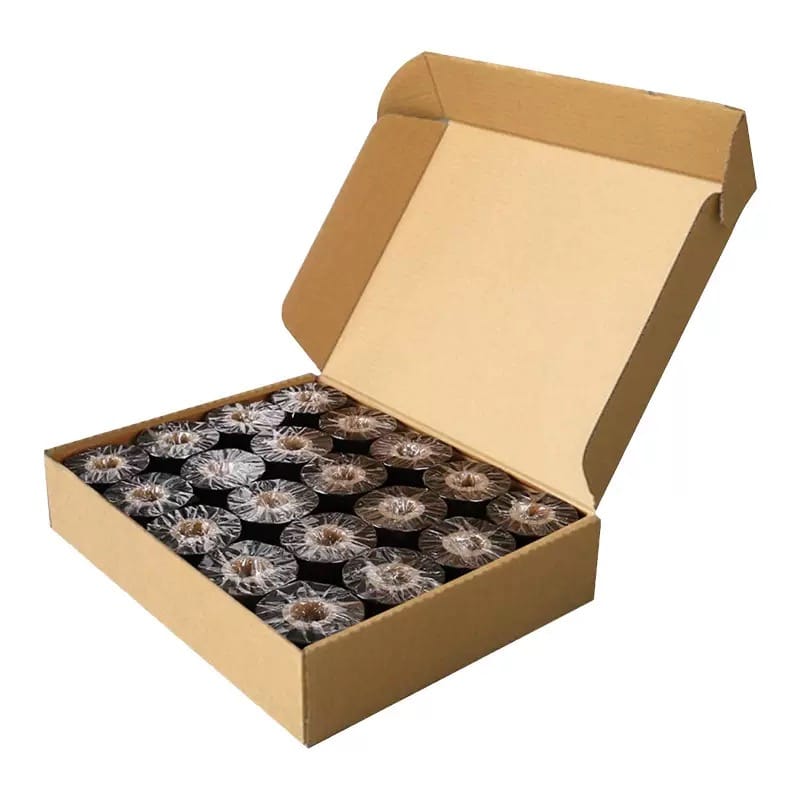
The following best practices can help maximize ribbon lifespan and maintain print quality.
Maintain the Recommended Temperature
The ideal storage temperature is between:
15°C and 25°C (59°F–77°F)
Avoid storing ribbons in:
- Hot warehouses
- Shipping containers
- Near heaters
- Areas exposed to direct sunlight
Excessive heat can soften the ink coating and cause ribbon layers to stick together.
Control Humidity Levels
Recommended storage humidity is:
40%–60% Relative Humidity
Excessive humidity may damage the ribbon coating and reduce printing performance.
Very dry environments can also increase static electricity, which may affect ribbon handling and printing consistency.
Keep Ribbons in Original Packaging
Original packaging is designed to protect ribbons from environmental damage.
Benefits include protection from:
- Dust
- Moisture
- UV exposure
- Physical damage
If the packaging has been opened, reseal it as soon as possible.
Store in a Cool, Dry Location
Thermal transfer ribbons should be stored in a clean and dry environment.
Suitable storage locations include:
- Storage cabinets
- Shelving systems
- Sealed containers
In humid regions, desiccants can provide additional moisture protection.
Avoid Direct Sunlight
Ultraviolet radiation can accelerate material aging and coating degradation.
Store ribbon cartons away from:
- Windows
- Skylights
- Outdoor loading areas
Prevent Physical Damage
Do not place heavy objects on top of ribbon boxes.
Excessive pressure can deform the thermal ribbon roll and create wrinkles that affect printing performance.
Keep Away from Chemicals
Store ribbons separately from:
- Solvents
- Paints
- Industrial chemicals
- Cleaning agents
Chemical vapors may react with ribbon coatings and shorten ribbon lifespan.
Follow FIFO Inventory Management
Always use older inventory before newer inventory.
Following the First-In, First-Out principle helps prevent ribbons from remaining in storage for excessive periods and ensures consistent print quality.
Conclusion
The lifespan of a thermal ribbon roll involves two separate concepts: the shelf life of the unused ribbon and the durability of the printed image after use.
Under recommended storage conditions, most quality ribbons can be safely stored for approximately two to three years. Proper storage—including controlled temperature, moderate humidity, protection from sunlight, and careful handling—plays a critical role in maintaining ribbon performance.
The durability of printed information depends largely on the ribbon type. Wax ribbons are suitable for short-term applications, while a wax resin thermal transfer ribbon provides enhanced durability for everyday industrial labeling. For applications requiring long-term readability and maximum resistance to chemicals, abrasion, heat, and UV exposure, a thermal transfer resin ribbon remains the preferred solution.
Rather than overstocking ribbons, businesses should focus on maintaining proper storage conditions and implementing FIFO inventory management. Creating the right storage environment is often more important than the ribbon’s theoretical shelf life and can significantly improve printing reliability over time.
